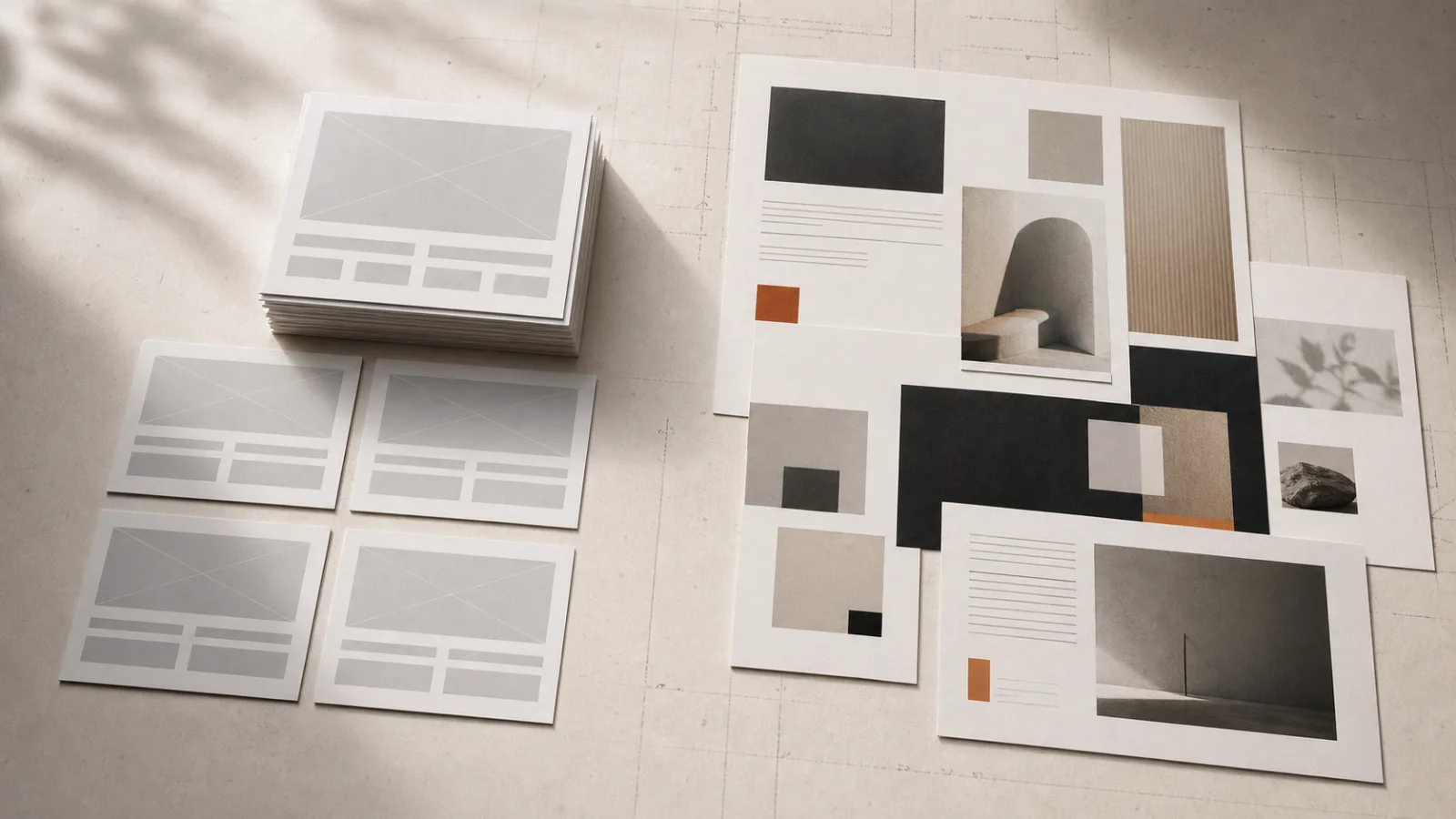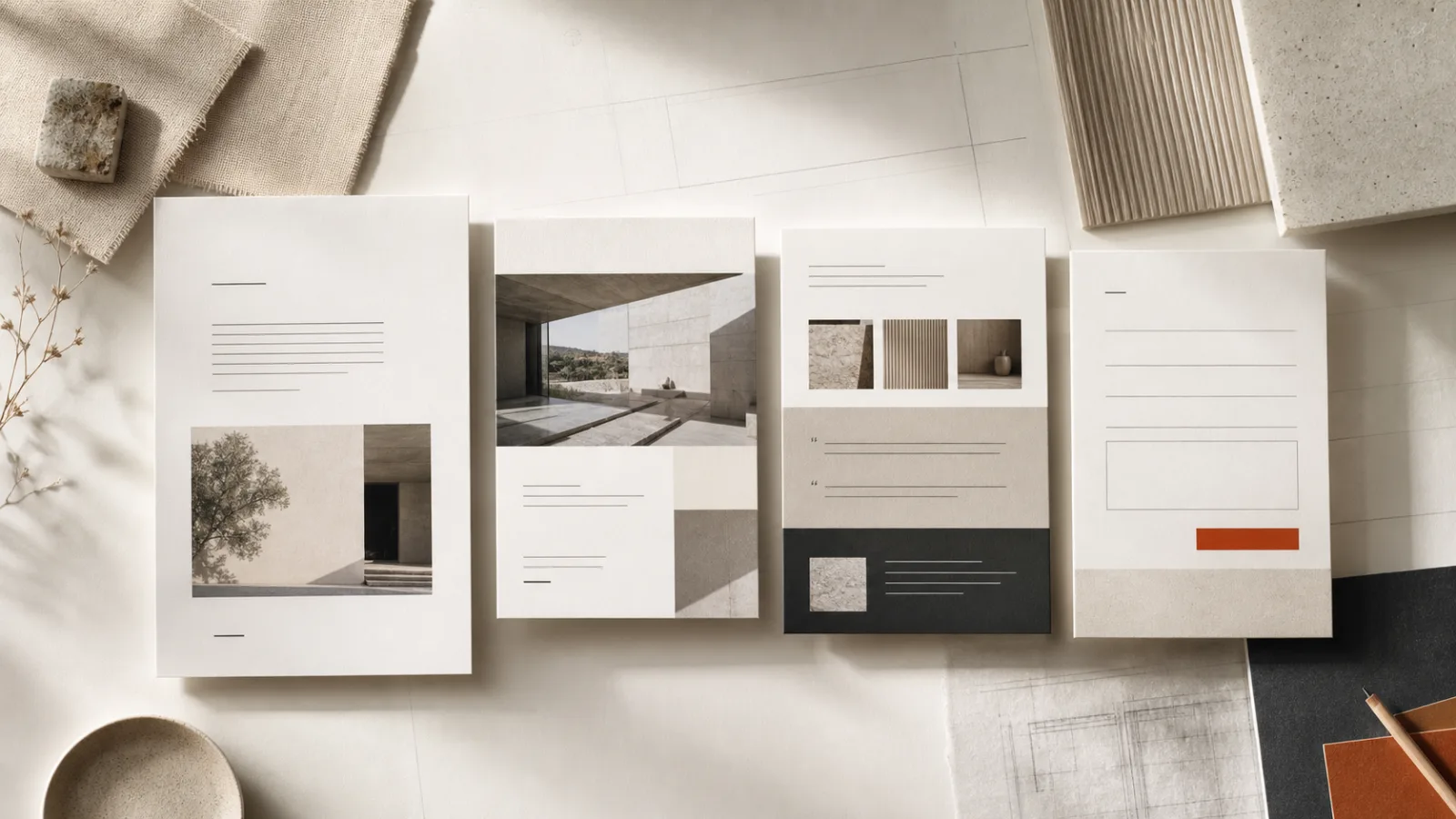
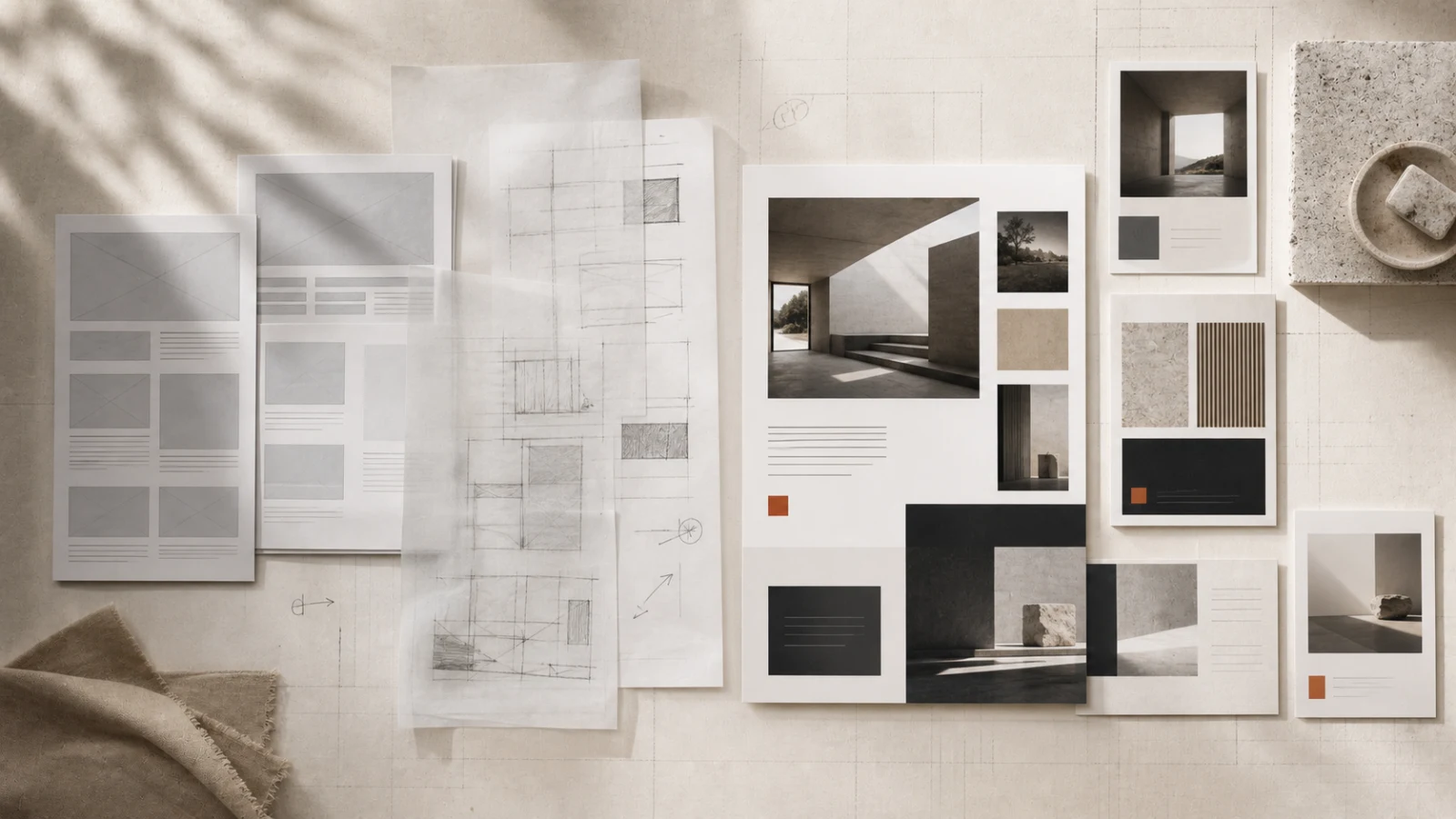
A website redesign is more than a new visual layer. It is an opportunity to reconsider how people understand your business online, which clients you want to attract and the role your website should play in growth.
Redesign projects often begin with a surface-level question: how can we make the website look more modern? A better question is: why does the current website no longer move the business forward? The answer determines whether you only need to update the design or reconsider positioning, structure, content and technology as well.
What is a website redesign?
A website redesign reshapes the experience and presentation of an existing website. Its scope can vary considerably. Content and technology may remain largely intact, or the entire site may be rebuilt around a sharper strategy.
A substantial redesign can include:
- clearer positioning and messaging;
- a new information architecture and navigation;
- a distinctive visual and interactive design system;
- stronger project or service pages;
- understated but clearer paths to contact;
- a more flexible content management system;
- technical improvements for speed, accessibility and SEO.
The aim is not change for its own sake. A redesign should solve a meaningful problem and bring the digital experience in line with the quality and ambitions of the business.
When is it time to redesign your website?
An outdated appearance can trigger the conversation, but it is rarely the only reason. The following signals matter more strategically.
Your business has outgrown the website
Your services, expertise or audience have evolved while the website still tells the old story. Prospective clients receive an incomplete impression or compare you using the wrong criteria.
The quality of your work is not apparent online
For architects and creative businesses, a website extends the portfolio. When projects appear as isolated images without context, expertise remains hidden. A redesign can turn case studies into narratives about challenge, perspective, decisions and outcomes.
You attract too few suitable enquiries
More traffic or form submissions do not automatically create growth. If enquiries are too small, tentative or unsuitable, the website needs to qualify visitors more effectively through clear positioning, relevant proof and a considered journey.
The structure obstructs visitors
Services, projects and articles accumulate over time without a coherent plan. Visitors have to search, important pages sit too deep and navigation reflects internal departments rather than client questions.
Publishing content takes too much effort
When every project needs to be assembled manually or the CMS quickly creates inconsistency, the system does not fit the editorial process. A custom website can combine structured content models with enough freedom for different stories.
Technology and performance hold back the experience
Slow pages, poor mobile presentation, inaccessible components or an unmaintainable technical foundation affect experience and visibility. A visual update alone will not resolve them.
Start the redesign with strategy
Before designing screens, define what needs to change commercially. Begin by answering:
- Which clients are the best fit for the business?
- Which expertise or approach genuinely distinguishes you?
- Which questions and concerns arise before a prospect makes contact?
- Which content and case studies create the most confidence?
- Which actions should visitors be able to take at different stages?
- How will you measure whether the redesign works after launch?
These principles keep the new site from becoming another collection of pages. They provide a decision framework for structure, copy, design and functionality.
Identify what deserves to remain
A redesign should not discard everything. Existing brand recognition, strong content, valuable search rankings and familiar user patterns may represent considerable equity.
Create a content inventory that records the purpose, traffic, keywords, internal links, conversion contribution and freshness of every page. Then decide whether each page should remain, improve, merge or disappear.
This prevents two common mistakes: losing valuable material and transferring outdated content into a new structure without scrutiny.
Structure the website around decisions
A clear website does not automatically follow the organisational chart. Its structure helps visitors decide whether you are relevant, understand your approach and build confidence.
For architecture practices and creative businesses, this often requires a considered relationship between:
- expertise and services;
- projects and project types;
- perspective and process;
- team and credibility;
- insights and current expertise;
- an appropriate next step.
The homepage does not need to communicate every detail. It should open the right routes. Deeper pages then provide the evidence and nuance expected in a high-value decision.
Combine distinctive design with conversion
Conversion optimization does not have to make a refined brand feel aggressive. It is about clarity and timing rather than the greatest possible number of buttons.
A strong redesign makes the right next step visible at the right moment: a relevant case study, process explanation, answer to a concern or invitation to discuss a project. The website supports the decision without interrupting the experience.
Learn more about improving website conversion without aggressive sales tactics.
Protect SEO during the redesign
SEO losses rarely come from the new design itself. They result from careless migration: URLs change without redirects, useful copy disappears, internal links break or search engines receive contradictory signals.
At minimum:
- record existing URLs and their performance;
- retain strong URLs when changing them offers no benefit;
- create one-to-one 301 redirects for retired addresses;
- preserve or improve content already earning relevant impressions;
- review titles, descriptions, heading structure and canonicals;
- update internal links and the XML sitemap;
- test indexability before and after launch;
- monitor rankings, impressions and errors in Search Console.
SEO should inform the first structural decisions. A check immediately before launch comes too late to correct fundamental issues efficiently.
Test before launch
A considered redesign is tested on more than appearance. Review the most important journeys across screen sizes and, where possible, involve people who have not worked on the project every day.
Test:
- navigation and access to important information;
- forms, validation and confirmations;
- speed and visual stability;
- keyboard access, contrast and alternative text;
- analytics, conversion tracking and cookie preferences;
- redirects, metadata and structured data;
- adding and editing content through the CMS.
Plan for the first weeks after launch as well. A redesign is not an endpoint: real usage data reveals where further refinement creates the most value.
What makes a website redesign successful?
A successful redesign does not simply feel newer. It clarifies who the business serves, presents expertise more convincingly and helps suitable visitors take a confident next step.
The best outcomes emerge when strategy, content, design, technology, SEO and conversion are developed as one system. The website then becomes a digital foundation capable of supporting years of growth rather than a temporary visual refresh.
If your current website no longer reflects the quality or ambition of your business, explore how Devife creates high-end custom websites, or see our approach for architects and creative businesses.