A template can be a sensible way to get online quickly. As a business grows, its positioning becomes clearer and the website takes a more active role in attracting opportunities, fixed structures can become limiting.
The choice between a custom website and a template is therefore about more than appearance. It concerns strategy, distinction, flexibility and the role the website should play in the business.
When is a template a logical choice?
A template often works well when your offer is still changing, you need a basic presence quickly or the website mainly serves as a simple digital introduction.
The advantages are straightforward:
- you can launch relatively quickly;
- common page structures already exist;
- many general features are immediately available;
- fewer strategic and technical decisions are required.
The trade-off is that the brand and content must fit an existing structure. That becomes noticeable when your expertise, projects or client journey do not fit comfortably within it.
When does a custom website become relevant?
A custom website becomes valuable when the website is a serious part of your positioning and growth. For example, when:
- you are an established business with a clear vision;
- your current website no longer reflects the quality of your work;
- you need to connect different audiences, services or project types clearly;
- your portfolio needs to do more than display images;
- you want better enquiries, not simply more of them;
- you need specific integrations or editorial workflows.
Custom work does not begin with colours or animation. It begins by defining how your business should be understood and selected online.
The difference in strategy
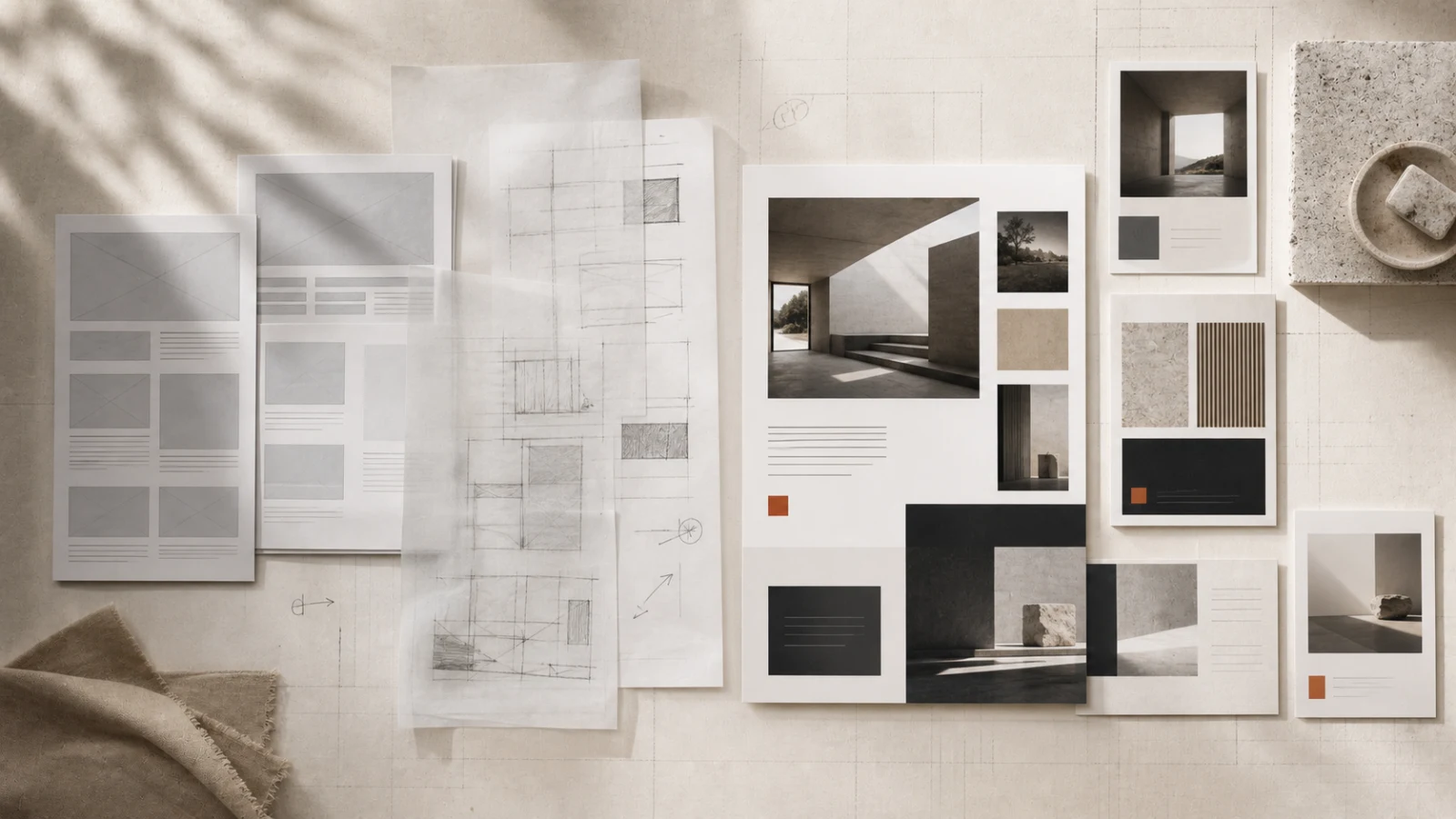
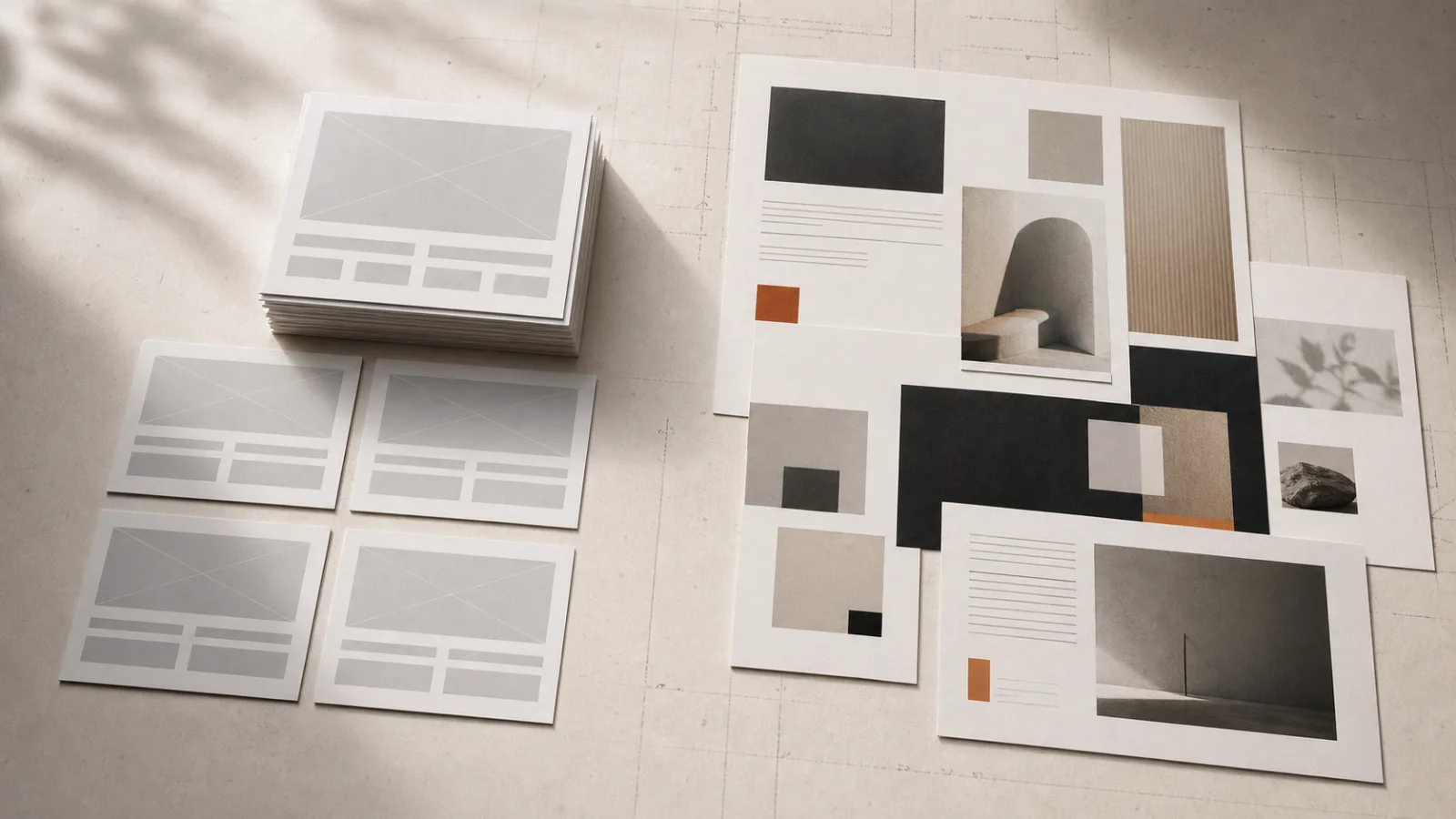
With a template, the format is usually selected before the content is added. A custom process reverses that order. Positioning, audience, evidence and objectives shape the structure first. The design then develops around that content.
This creates room for a considered client journey: from first impression and relevance to suitable cases, confidence and an appropriate next step.
The difference in design and brand experience
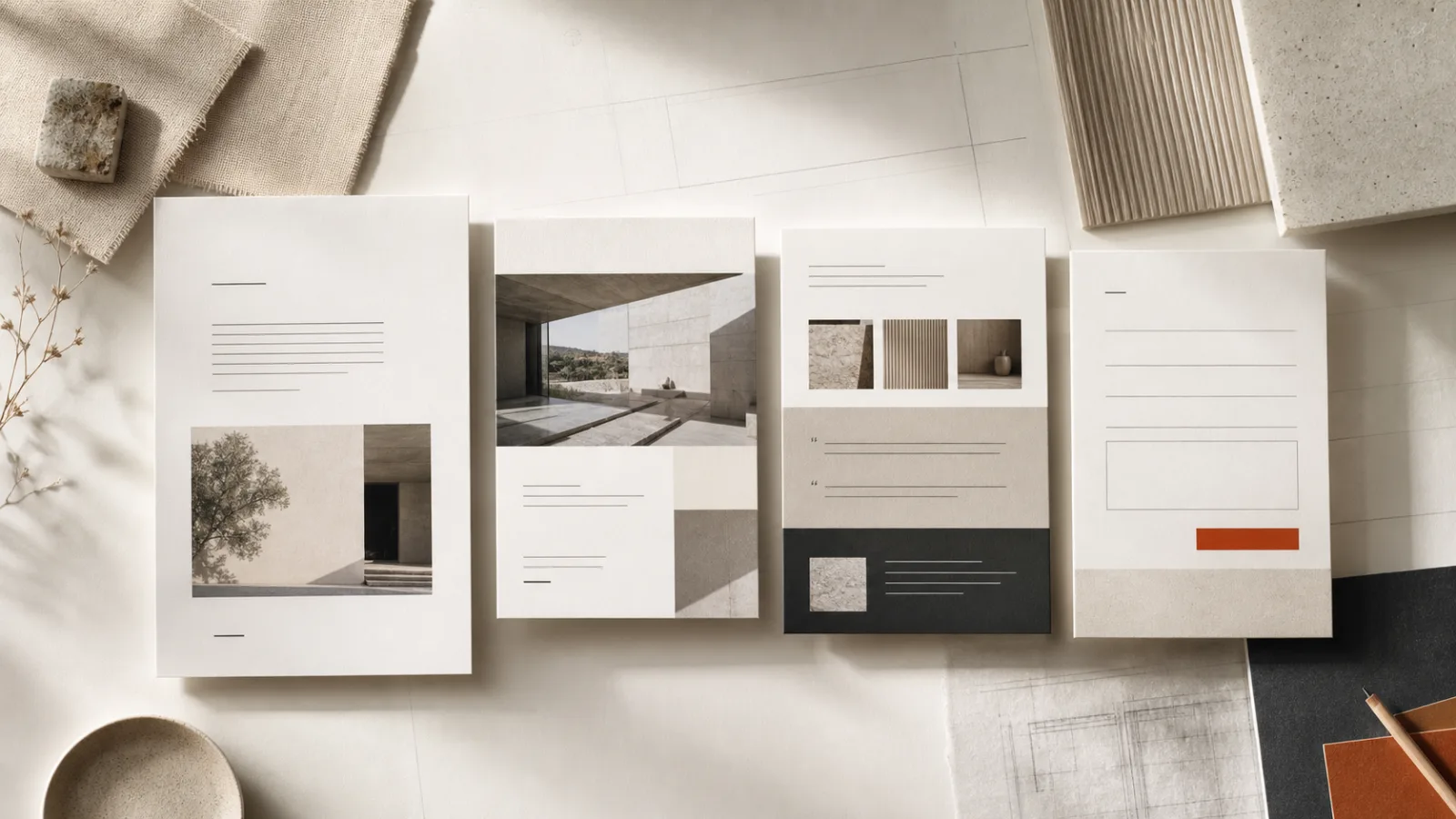
A template can be visually adapted, but its underlying patterns often remain recognisable. For architects and creative businesses, the relationship between typography, photography, space, movement and project presentation is especially important.
Custom design makes it possible to create a digital experience with the same quality and individuality as the work you sell. Explore our approach to web design for architects and creative businesses.
The difference in content management
A custom system should not require a developer for every update. The content management system is shaped around what your team actually publishes.
For an architecture practice, that may include projects, disciplines, locations, project stages and publications. For a creative studio, cases, services, team members and insights may be central. The team can manage content independently while the presentation remains consistent.
The difference in conversion
Templates use general conversion patterns. A custom website can align the route to contact with your sales process and the level of confidence a substantial engagement requires.
That does not necessarily mean more or louder buttons. It means evidence, content and next steps appear at the right time. Learn more about improving website conversion without aggressive sales tactics.
A practical decision check
A template is probably sufficient when speed matters more than distinction and the website does not yet have a central commercial role.
Custom work is more appropriate when several of these statements feel familiar:
- our website no longer reflects who we are today;
- prospective clients do not understand what makes us different;
- our cases communicate too little of our expertise;
- existing systems restrict our content or functionality;
- we want to grow over the coming years without starting again;
- the digital experience should match the quality of our work.
Custom is primarily a strategic choice
The best solution is not the one with the most functionality. It is the one that fits the maturity of your business and the role the website needs to fulfil.
If you have moved beyond a general structure, explore our approach to high-end custom websites, or view our relevant work.
Two projects, two different decisions
For Under the Cherry Tree, the design centres on art, atmosphere and the maker’s story. For REM Zonwering, services, project evidence and the route to a quote are central. The appropriate structure follows from the visitor’s needs and the website’s role.
When comparing proposals, ask how the provider will structure your services, portfolio and content editing. Also ask what your team can change, what the collaboration requires and how existing URLs will be handled during a redesign.